Destination briefing
Why travelers stop here
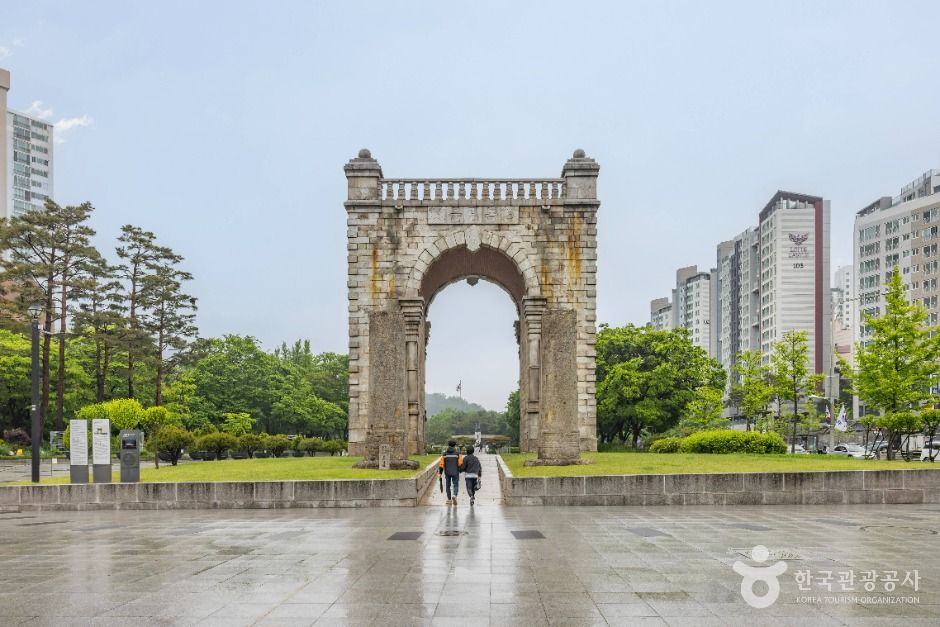
Located in Seodaemun Independence Park, Dongnimmun Gate is a monument built after dismantling Yeongeunmun Gate, which was used to welcome Chinese envoys, to reaffirm the will for independence following the Gabo Reforms. The Gabo Reforms were a reform movement that promoted internal and institutional reforms. However, due to interference from foreign powers, they did not succeed, and the nation's independence was not achieved. Consequently, the people, determined not to allow any interference for the sake of national independence and freedom, dismantled Yeongeunmun Gate, which had welcomed Chinese envoys, and erected Dongnimmun Gate in its place. This gate, made of piled granite, features a rainbow-shaped arch in the center, and on the left interior, there is a stone staircase leading to the top. The top is surrounded by stone railings, and the keystone of the arch is engraved with the plum blossom pattern, a symbol of the Joseon Dynasty. Above it, on the front and back, the words 'Dongnimmun' are inscribed in both Korean and Chinese characters, with the Taegeukgi (Korean flag) engraved on either side. Nearby is the Seodaemun Prison, allowing for a historical journey reflecting on the longing for democracy and free will, along with Dongnimmun Gate.
OTA-ready stop
Built into inbound routes and day-tour planning.
Local context
서울특별시 서대문구 현저동
Travel fit
Attraction · Seoul


![[Early bird] Elysian Gangchon Ski & Snowboard Gugok Ice Wall Tour](/_next/image?url=https%3A%2F%2Fadmin.holidaykr.com%2Fapi%2Fadmin%2Fsystem%2Fbasic-settings%2Ffavicon%3Fpath%3D%252Fuploads%252Fproducts%252Fthumbs%252F750_1792085658746_file1.webp&w=3840&q=75)