Destination briefing
Why travelers stop here
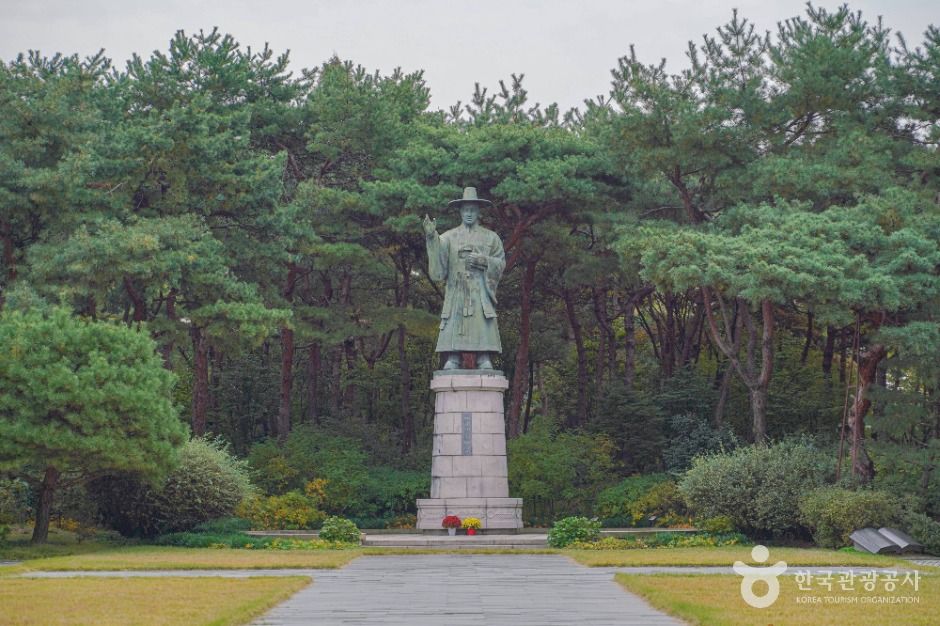
The Jeong Mong-ju Statue was erected on October 16, 1970, and is located in the green area at the entrance of Yanghwa Bridge in Hapjeong-dong. Poeun Jeong Mong-ju (1337–1392) was a civil official and scholar of the late Goryeo period. He placed first in the civil service examination in 1360 and served as Umun-gwan Daejehak (Head of the Office of Diplomatic Correspondence). He excelled in diplomacy with Ming China and Japan, and made significant contributions such as suppressing Japanese pirates and the Jurchen tribes. He also established Uichang (public granaries) to aid the poor, promoted Confucianism, and was well-versed in Neo-Confucianism. He sought to rationalize social ethics and morality and remained loyal to Goryeo, but was sacrificed as the nation's fortune waned and new forces emerged to lead the country. His poem 'Dansimga' and many other Chinese poems have been passed down. He was also outstanding in calligraphy and painting, and was one of the 'Three Eun of Goryeo.' In the first year of King Taejong (1401), he was posthumously appointed as Yeonguijeong (Chief State Councillor) and posthumously enfeoffed as Ikyang Buwongun (Prince of Ikyang). During the reign of King Jungjong, he was enshrined in the Confucian shrine (Munmyo).
OTA-ready stop
Built into inbound routes and day-tour planning.
Local context
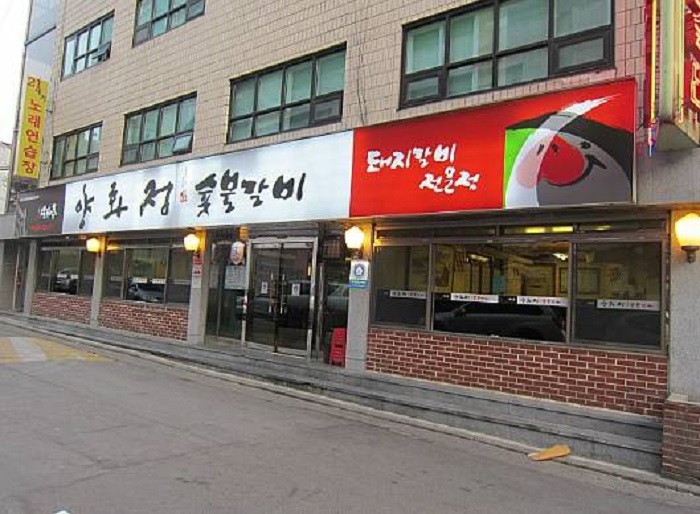
서울특별시 마포구 합정동
Travel fit
Attraction · Seoul

![[Early bird] Elysian Gangchon Ski & Snowboard Gugok Ice Wall Tour](/_next/image?url=https%3A%2F%2Fadmin.holidaykr.com%2Fapi%2Fadmin%2Fsystem%2Fbasic-settings%2Ffavicon%3Fpath%3D%252Fuploads%252Fproducts%252Fthumbs%252F750_1792085658746_file1.webp&w=3840&q=75)