Destination briefing
Why travelers stop here
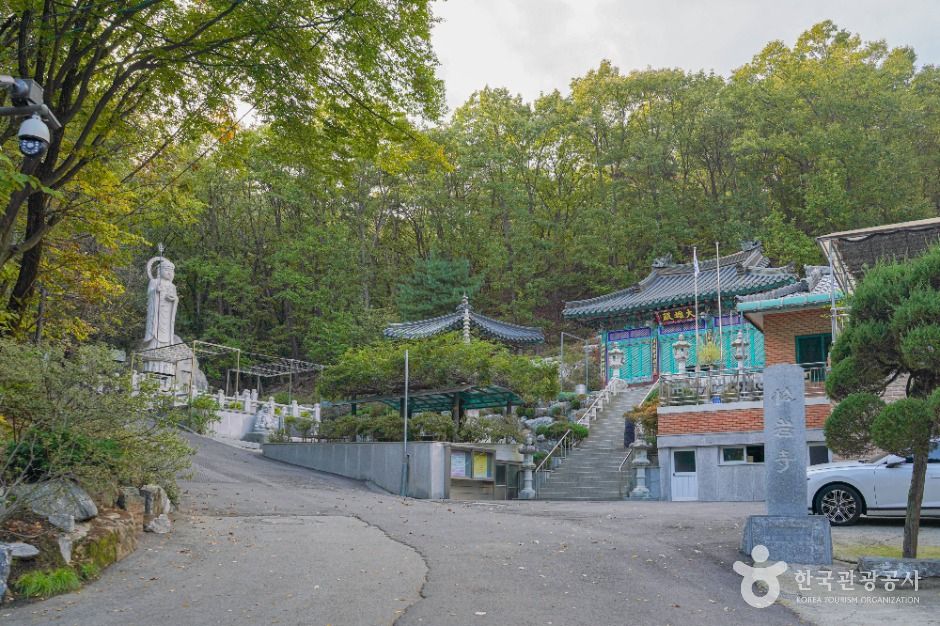
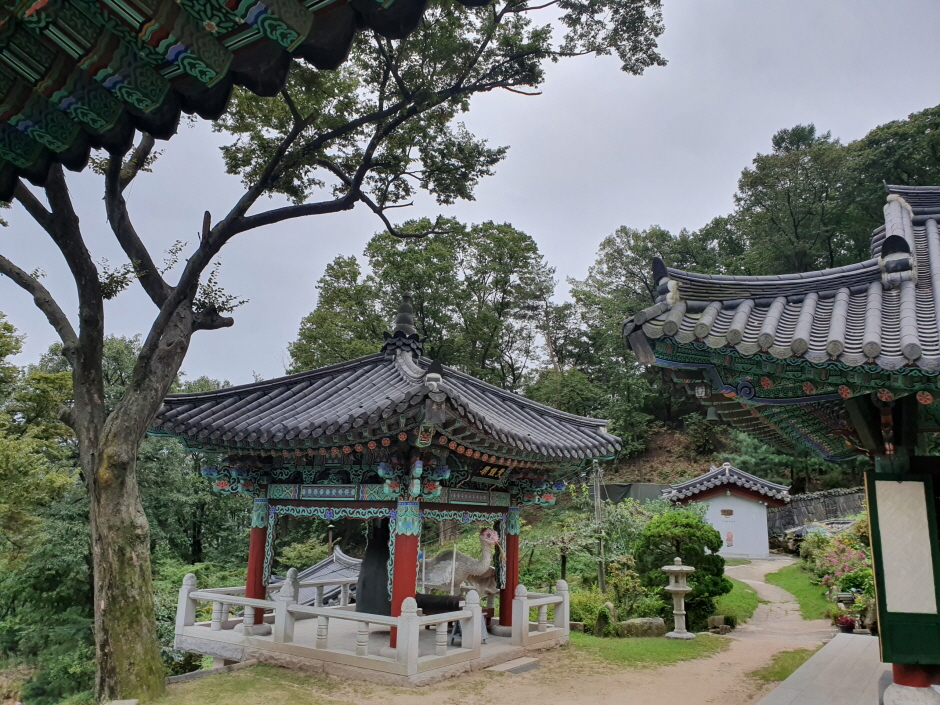
Located on a south-facing auspicious site halfway up Suraksan Mountain, Suamsa Temple is a direct-control temple of the Jogye Order of Korean Buddhism. It was founded in the 43rd year of King Jinpyeong of Silla (621 AD) by National Preceptor Wongwang, the author of the secular five precepts for Hwarang, with the aim of achieving the great task of unifying the Three Kingdoms. After being destroyed during the Byeongja Horan (Manchu invasion) of the Joseon Dynasty, only the Seokguk Dharma Hall remained, and the temple was later rebuilt. The temple grounds include the Geungnakbojeon (Paradise Hall), a 25-pyeong traditional-style (dancheong) building erected during the reconstruction led by Monk Douk in 1962, along with Samseonggak, the monks' quarters, and a standing Maitreya statue built in 1972. On a large rock next to Geungnakbojeon, a dragon ascending to heaven while holding a cintamani jewel is engraved in intaglio, and in the center of the temple complex, there is a red pine tree that appears to depict several dragons writhing and ascending to heaven. There is also a cave shrine where a mysterious spring is said to flow. Along with Doansa Temple, Songamsa Temple, and Doseonsa Temple, it can be visited while climbing Suraksan Mountain.
OTA-ready stop
Built into inbound routes and day-tour planning.
Local context
서울특별시 노원구 상계동 산153-1
Travel fit
Attraction · Seoul

![[seouldulregil 3koseu] Buramsankoseu](https://tong.visitkorea.or.kr/cms/resource/22/3526122_image2_1.jpg)
![[Early bird] Elysian Gangchon Ski & Snowboard Gugok Ice Wall Tour](/_next/image?url=https%3A%2F%2Fadmin.holidaykr.com%2Fapi%2Fadmin%2Fsystem%2Fbasic-settings%2Ffavicon%3Fpath%3D%252Fuploads%252Fproducts%252Fthumbs%252F750_1792085658746_file1.webp&w=3840&q=75)