Destination briefing
Why travelers stop here
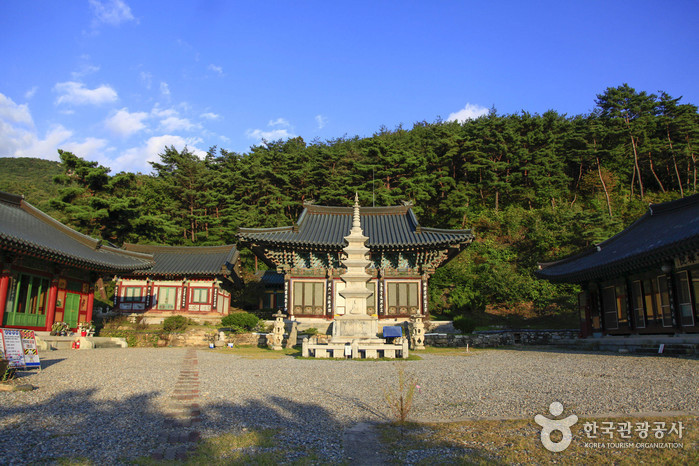
Gapjangsan Mountain, located in Nakdong-myeon, Sangju-si, Gyeongsangbuk-do, is 806m high and is one of the ridges of the Sobaek Mountains, where the Baekdudaegan rises as a Jurassic granite mountain. Sangju's three peaks are Yeonak Gapjangsan, Noak Noeumsan (725m), and Seokak Cheonbongsan (435m), among which Gapjangsan is the most famous. It is said that its height and spiritual energy are clear and bright, so prayers or rituals held here during floods or droughts each year are quickly answered. King Chungnyeol of Goryeo, while resting briefly at Seungjangsa Temple, called it the best mountain in Yeongnam, naming it Gapjangsan, and it is also named after Gapjangsa Temple. Gapjangsan originates from the spring Guryongyeon at 670m northeast of the summit, extending east to Jangcheon and Seonsan Musugol Valley, west to Byeongseongcheon (Namcheon or Icheon), south to Santaebaekijae, and north to Seonggolgogae. The mountain is gentle and beautiful, with the temple Gapjangsa near the summit, as well as Sangsabawi, Baekgilbawi, Sirubong, Barammun, and Naongbawi scattered around. Close to Sangju city center, it is a popular weekend resting spot for citizens, with various hiking trails developed. A common course is from Yongheungsa Temple parking lot, following Yongheungsa Temple or a forest road, passing through Gapjangsa Temple grounds to the summit. The mountain is covered with various native plants and undergrowth, with the steep cliff Baekgilbawi to the east, a peculiar rock shaped like an inverted rice steamer called Sirubong to the south, and the Nakdong River meandering to the east. At the summit of Gapjangsan is Gapjangsa Temple, and on the mountainside, Yongheungsa Temple and rest facilities (restaurants, parking lots, etc.) welcome visitors to the deep mountain valleys. The total distance is 7.6km, taking approximately 2 hours and 30 minutes.
OTA-ready stop
Built into inbound routes and day-tour planning.
Local context
경상북도 상주시 낙동면 비룡리
Travel fit
Attraction · Gyeongsangbuk-do