
Daegu markets, herbal-medicine street, Apsan and Palgongsan, food and festivals; Andong with Hahoe Folk Village, the UNESCO seowon, Bongjeongsa and the mask dance festival; bus and train times, fees and hours, plus 3- and 5-day plans.
Overview
Daegu (大邱) is a city of about 2.35 million people in a basin in south-eastern Korea, known for its summer heat, its traditional markets and a food culture built on spicy, hearty dishes. It was long a textile city and is also nicknamed the Apple City for the fruit its climate suits. The city tourism board's list of twelve scenic spots gives a good outline: Biseulsan, the Gangjeong-Goryeong weir, Sincheon stream, the National Debt Repayment Movement Park, Palgongsan, Suseong Lake, 83 Tower, Seomun Market, Daegu Stadium, Dongseongno, Dalseong Earthen Fortress, and Gyeongsang Gamyeong with its old alleys.
A short trip to Daegu works well as a base for the Andong region to the north. The Andong area holds three separate UNESCO World Heritage listings: Hahoe Folk Village (2010), the neo-Confucian academies Dosan and Byeongsan Seowon (2019) and Bongjeongsa temple, one of seven mountain monasteries (2018). Daegu itself also has one of the nine academies in that 2019 listing, Dodong Seowon in Dalseong County.
Allow two full days for Daegu and one for Andong, or three days for Daegu and Andong together. Daegu is a modern city with a good metro, while Andong is small and slow-paced, so the two feel very different and complement each other.
Best time to go
Daegu has a humid subtropical climate and some of the hottest summers on the Korean peninsula; the city's record high is 40.0 degrees. Spring and autumn are the comfortable seasons. April brings cherry blossoms at Palgongsan, azaleas at Biseulsan and the Dalseong Earthen Fortress festival, and May has the lantern parade, the Powerful Daegu street festival and the Yangnyeongsi herb-market festival.
July is the chicken-and-beer month with the Daegu Chimac Festival at Duryu Park, but the heat peaks then, so plan indoor stops. Autumn is the best time for Andong, whose International Mask Dance Festival runs from late September into the first week of October (24 September to 4 October in 2026), and for the color of the ginkgo trees at the seowon academies. Winter is cold and quieter; Andong sites keep shorter hours from November to January. Dates for next year's festivals are announced each year and this guide is updated when they are confirmed.
Getting there
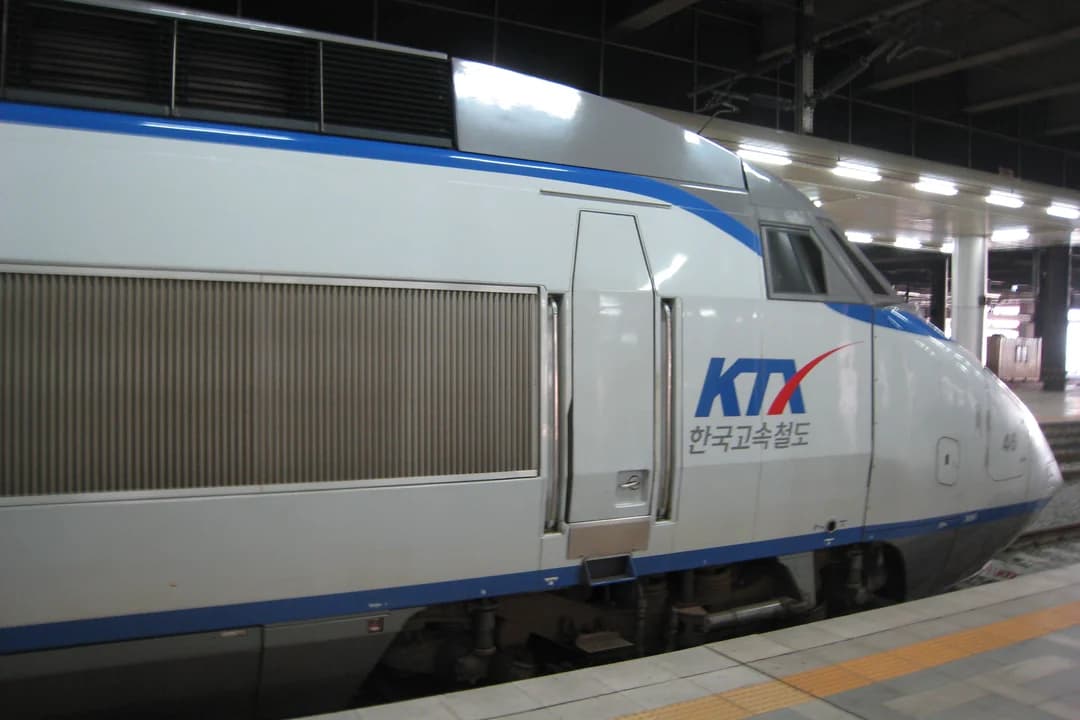
Daegu has three railway stations (as of 2026-10-11). Dongdaegu Station in Dong-gu (550 Dongdaegu-ro) is the main KTX stop, also served by Saemaeul and Mugunghwa trains, and the city tourism board gives about 1 hour 40 minutes from Seoul and about 1 hour from Busan. The Dongdaegu Station Complex Transfer Center links the KTX, the metro, and express and intercity buses. Daegu Station in the city center (opened in 1904) takes only the slower trains, and Seodaegu Station is on the KTX and the Daegu Line.
Daegu International Airport in Dong-gu (221 Gonghang-ro) has three boarding bridges and domestic and some international flights. For buses, the Bukbu (Northern) Intercity Bus Terminal in Seo-gu is the largest and has the most routes, including to Gangwon, while the Seobu (Western) terminal serves Gyeongju, Pohang, Gumi, Masan and Jinju. From Dongdaegu Station or the Bukbu terminal, buses reach Andong in about 1 hour 20 minutes.
Getting around Daegu
Daegu's metro has three lines plus the Daegu Line, all useful for visitors (as of 2026-10-11). Line 1 runs from Seolhwa-Myeongok to Hayang through Jungang-ro, Daegu Station and Dongdaegu; Line 2 runs from Munyang to Yeungnam University and meets Line 1 at Banwoldang and Line 3 at Beomeo; Line 3 is an elevated monorail running from Chilgok Kyungpook National University Hospital to Yongji, passing Seomun Market. The Daegu Line connects Gumi and Gyeongsan via Seodaegu and Daegu stations. A Tmoney card works on buses, metro and taxis across Korea.
The city tour bus is a double-decker with a circulation course of 14 stops, among them Dongdaegu Station, Seomun Market, E-World, Duryu Park, the Apsan observatory and Suseong Lake, plus three themed courses. A Palgongsan course runs daily except Mondays and combines culture and history in one day. Taxis are plentiful downtown, where the sights are close together, and the metro is cooler than the streets in July and August.
Seomun Market and Dongseongno
Seomun Market (10 Keunjang-ro 28-gil, Jung-gu) is Daegu's largest traditional market, with more than 4,000 shops, and it takes its name from its position outside the old west gate of the city walls. It settled on its present site in 1920 and was counted among Joseon's three largest markets. It is open 09:00 to 18:00 (as of 2026-10-11) and is known for silk and cotton fabric, handicrafts, fish and dried fish, kitchenware and clothes. Luggage storage and parking are available, and Seomun Market Station on Metro Line 3 is the closest stop.
A night market has been added around Seomun and Chilseong markets, and the city tourism board reports that the 2026 season opened on 27 March; the Seomun night market has been chosen as one of the Korea Tourism Organization's top 100 night-tourism destinations (as of 2026-10-11). Dongseongno in Jung-gu is the busiest shopping street in the city, with department stores, shopping malls, brand shops, bookshops, cinemas and performance halls, and it hosts a Dongseongno Festival in April and May. It is easy to walk between the market and Dongseongno in an afternoon and eat on the way.
Yangnyeongsi, Gyeongsang Gamyeong and the old alleys
Yangnyeongsi is a herbal-medicine market with about 350 years of history, lining some 650 meters of Namseong-ro in Jung-gu with herbal tea shops, oriental pharmacies and restaurants (as of 2026-10-11). The Yangnyeongsi Exhibition Hall is open Monday to Friday 09:00 to 18:00 (17:00 in winter) and Saturdays and holidays 09:00 to 17:00, closed Sundays, and the Museum of Oriental Medicine is open 10:00 to 18:00 and closed on Mondays, Lunar New Year's Day and Chuseok. The market festival is held every May. The first hour in the parking lot is free, but public transport is easier downtown.
Gyeongsang Gamyeong, the Joseon-era provincial government compound in Jung-gu, is one of the twelve scenic spots; its park is the stage for a revival of traditional customs from April to October, including a signaling ceremony, a reward ritual and a parade of the arrival of the governors. The surrounding old alleys form the Daegu modern-heritage district, where cultural interpreters lead alleyway tours. Together with Seomun Market and Dongseongno, these streets make a compact half-day walk in the city center.
Kim Gwang-seok Street, Suseong Lake and the museums
Kim Gwang-seok Road in Daebong-dong, Jung-gu, next to Bangcheon Market, is a 350-meter wall of murals and statues about the life and songs of the singer Kim Gwang-seok, who lived nearby; a singing contest in his name takes place around Bangcheon Market and Dongseongno each autumn. Suseong Lake, a park since the 1940s, is ringed by hills and offers paddle boats and the Suseong Land amusement rides on its west side; the lake is open at any hour, though the shops keep their own hours.
Daegu Art Museum (40 Misulgwan-ro, Suseong-gu) is open 10:00 to 19:00 from April to October and 10:00 to 18:00 from November to March; tickets go on sale 30 minutes before opening and stop one hour before closing, and it is closed on Mondays (as of 2026-10-11). It has parking for 232 cars and accessible toilets and parking spaces. Daegu National Museum (321 Cheongho-ro, Suseong-gu) shows archaeology, art history and folk life, with hands-on corners for rubbing and early printing at Haesol Hall, and is a good rainy-day stop.
Apsan observatory and cable car
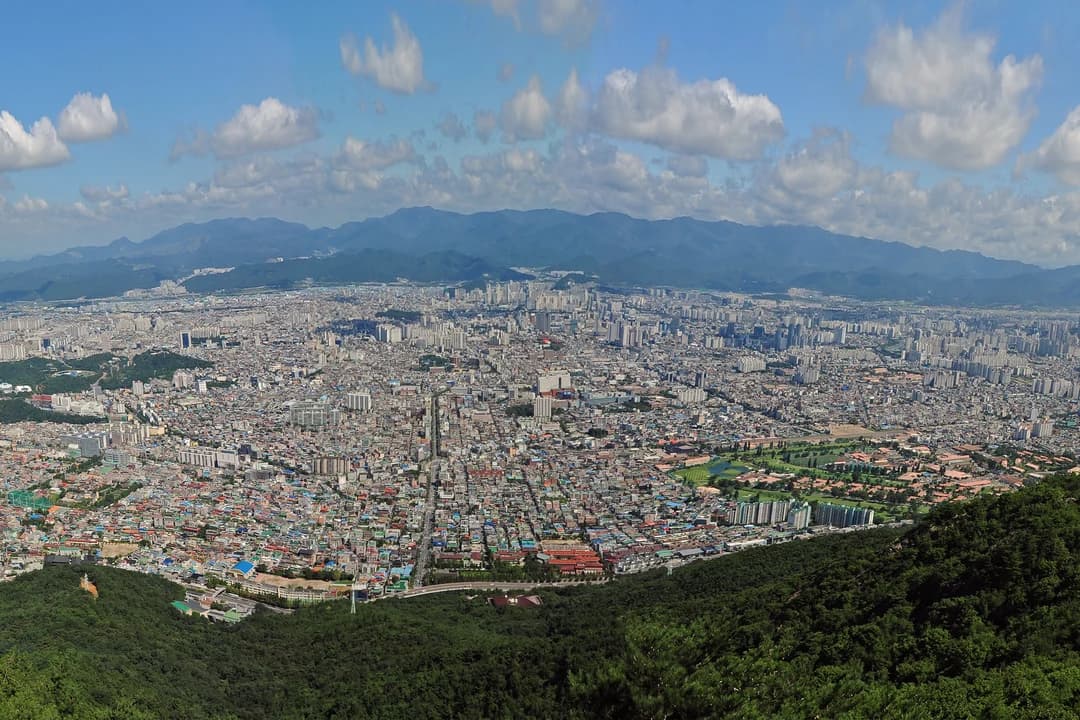
Apsan is the mountain closest to the urban area, with trails, temples and a Korean War museum, and its observatory (454 Apsansunhwan-ro, Nam-gu) looks over the whole city. The easy way up is the cable car from the Keungol side, listed as about 15 minutes; the whole route from the Keungol entrance via the cable car to the observatory is listed as 3.2 km and about 40 minutes (as of 2026-10-11). On foot, the route from the Anjirangol entrance passes Anilsa temple and takes about an hour over 2.5 km. Parking is at the Keungol lot.
Go late in the afternoon so you can see the city in daylight and then in lights; the observatory is one of the best night-view points in Daegu. Allow two to three hours, including the ride and time at the top, and carry a layer because it is cooler and windier up there than in the basin.
Palgongsan, Donghwasa and Gatbawi
Palgongsan lies on the north-eastern edge of the city and was made a national park on 23 May 2023; its highest point is about 1,193 meters. A cable car runs 1.2 km from the Donghwa facility zone (51 Palgongsan-ro 185-gil, Dong-gu) up to a station at about 820 meters with a rest area, and trails lead from there toward Donghwasa temple and Sutaegol valley (as of 2026-10-11). Cherry blossoms at the Donghwa area fountain plaza are celebrated in April.
Donghwasa was founded in 493 in the Silla period, when it was called Yugasa, and was rebuilt in 832 and renamed after paulownia trees that were still blooming in winter. Most buildings date to the Joseon period, a 33-meter Tongil Yaksa Buddha statue was completed in 1992, and the temple holds national treasures including the Geumdangam three-story stone pagoda. It is open all year, wheelchair accessible and has parking; interpreters in English and Japanese can be arranged on weekdays or for groups.
Gatbawi, on the Gwanbong peak of Palgongsan at about 850 meters above sea level (350 Gatbawi-ro, Dong-gu), is a seated stone Buddha 4 meters tall, formally the Gwanbong Seated Buddha, Treasure No. 431. It is named for the flat stone on its head that looks like a traditional horsehair hat (gat). It is open without time restrictions, and believers climb at dawn because the Buddha is said to grant one wish; it is busiest at the start of each month, during university entrance exam season and at New Year sunrise. English, Chinese and Japanese interpreters can be arranged on weekdays or for foreign groups that reserve.
E-World, 83 Tower and Dodong Seowon
E-World (200 Duryugongwon-ro, Dalseo-gu) is a theme park that opened in 1993 around the 83 Tower, which rises 312 meters and has an observation deck with a 360-degree view of the city, restaurants, a hands-on musical museum and an ice rink. The park has a European-style design, fountains, lighting and rides, including a Sky Jump that drops 123 meters from the top of Woobang Tower, and offers an English-language guide service and wheelchair rental. It is best in the evening, when the tower and the lights reflect Daegu's night skyline.
Dodong Seowon (726 Gujiseo-ro, Guji-myeon, Dalseong-gun) is a Confucian academy built in 1568, closed during the 1592 Japanese invasion and rebuilt at its present site in 1605; it is part of the nine-academy UNESCO listing of 2019. It is open 10:00 to 18:00 (as of 2026-10-11) and is known for its mud walls, the Jungjeong-dang hall and ginkgo trees about 400 years old. The Mabijeong mural village in Dalseong County and the Biseulsan azalea slopes in April are other quiet options outside the center.
Daegu food: ttaro-gukbap, makchang and jjimgalbi
The city tourism board promotes ten Daegu flavors. Ttaro-gukbap, also called Daegu yukgaejang, is a spicy beef soup with chili oil, served with the rice separate (ttaro means separately). Makchang-gui is grilled beef tripe, specifically the fourth stomach, dipped in soybean-paste sauce and a favorite with soju. Mungtigi is thick-cut raw Korean beef from the thigh dressed in seasoning.
Dongin-dong jjimgalbi is braised beef ribs seasoned with chili powder and minced garlic rather than soy sauce, and the leftover sauce is mixed with rice at the end. The list also names nonmegi maeuntang (spicy catfish stew), spicy puffer-fish bulgogi, nureun-guksu (noodles of wheat and bean flour in an anchovy broth), muchimhoe (spicy dressed raw seafood), yaki-udon (a soupless stir-fried udon with chili and garlic) and napjak-mandu (a flat, thin dumpling filled with glass noodles, boiled, grilled and dipped in soy sauce).
Food streets cluster around Dongseongno, the Seomun and Chilseong night markets and Bangcheon Market. Most of these dishes are strongly seasoned, so ask for less chili if you do not eat spicy food, and raw beef (mungtigi) is a dish for adults who are comfortable with raw meat.
Daegu festivals and seasonal highlights
Daegu's festival year runs from the fiber expo to the autumn singing contest (as of 2026-10-11). March has the Daegu International Fiber Expo at EXCO; April brings the Biseulsan Azalea Festival, the Palgongsan Cherry Blossom Festival and the Dalseong Earthen Fortress Neighborhood Festival; April to October has the Gyeongsang Gamyeong customs revival; April and May have the Dongseongno Festival; and May has the lantern-parade festival (the 2026 parade was on 16 May), the Powerful Daegu street festival and the Yangnyeongsi herb-market festival.
In summer, the Daegu International Musical Festival is usually held in June and July in theaters around Dongseongno, and the Daegu Chicken and Beer Festival is held in July in the Duryu Park area, with chicken and drink stalls, concerts and cooking contests. In October the city runs a tourism stamp tour, and the tourism board reports that autumn also brings the Kim Gwang-seok singing contest. Dates for next year's festivals are announced each year and this guide is updated when they are confirmed.
Getting from Daegu to Andong
Andong has no airport of its own, and the nearest international airport is Daegu's, about 92 km to the south. Buses are the simplest link (as of 2026-10-11): the city tourism board lists 36 buses a day from the Dongdaegu terminal between 06:40 and 21:00 and 14 a day from the Bukbu terminal between 07:00 and 20:30, each taking about 1 hour 20 minutes. By car the same trip takes about 1 hour 20 minutes on the Jungang Expressway; use the Seoandong interchange for Hahoe Folk Village and Bongjeongsa, and the Namandong interchange for the Folk Museum and Dosan Seowon.
Direct buses also run to Andong from Seoul (from the Dong Seoul Terminal 13 a day, 07:00 to 18:30, and from the Seoul Express Bus Terminal in Gangnam 15 a day, 06:10 to 20:10, with a late-night service at 22:00), each taking about 3 hours; from Busan's Dongbu Terminal it is about 2 hours 40 minutes and from Pohang about 1 hour 50 minutes. By train, KTX-Eum services on the Jungang Line run from Seoul via Cheongnyangni, Wonju, Danyang and Yeongju, a KTX-Eum from Busan takes about 2 hours, and Mugunghwa trains serve Dongdaegu. Andong Station and the bus terminal sit side by side, and the main tourist information desk across from the station is open 09:00 to 18:00.
Hahoe Folk Village
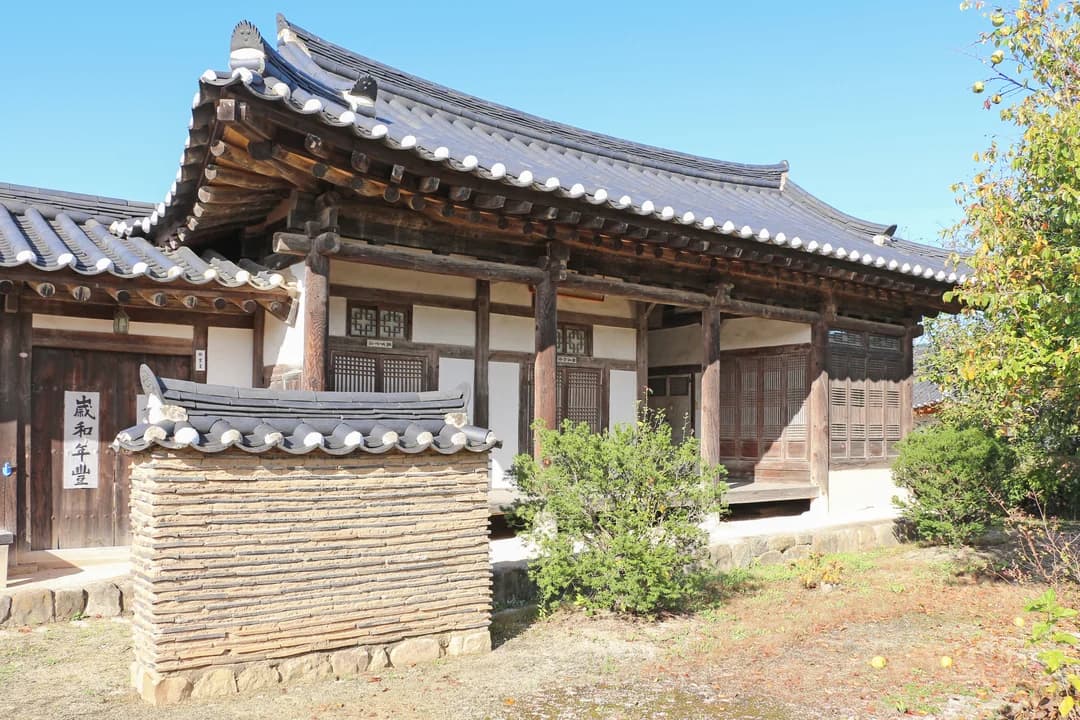
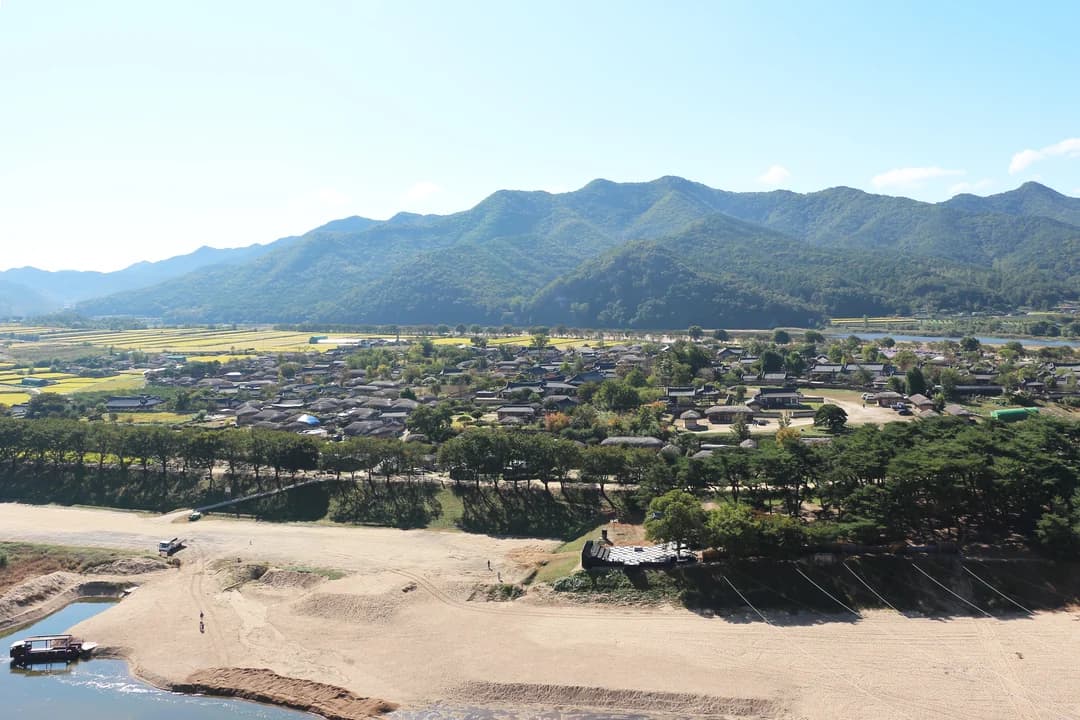
Hahoe Folk Village (63 Hahoenamchon-gil, Pungcheon-myeon) sits in a bend of the Nakdong River with Buyongdae cliff to the north and Mount Namsan to the south, a layout chosen according to feng shui. It was founded by the Ryu clan of Pungsan, which has lived there for centuries, and it was inscribed on the UNESCO World Heritage List in 2010 together with Yangdong Village. People still live in the houses, so respect private homes and stay on the marked routes.
Admission is ₩5,000 for adults aged 19 to 64, ₩2,500 for teenagers (13 to 18) and soldiers and ₩1,500 for children aged 7 to 12; group rates for 30 or more are ₩4,000, ₩2,000 and ₩1,200 (as of 2026-10-11). Children under 6, people aged 65 and over and visitors with disabilities enter free, wheelchair rental is free, and parking at Hahoe is free. The village is open 09:00 to 18:00 in the warm months and 09:00 to 17:00 in winter (November to January or February, depending on the listing), and an information desk inside is staffed 10:00 to 17:00.
The Hahoe area also includes the classic viewing point of Buyongdae cliff, the Okyeonjeongsa house, Hwacheon Seowon, the Chehwajeong pavilion in Pungsan-eup, the Andong Hanji exhibition hall and the mask museum. The village is far from any station: the last stage from Andong is by local bus or taxi, and the bus is slow and infrequent, so build the day around your return. A full day is a comfortable allowance, with the stroll through the village itself taking a few hours.
Masks, the mask museum and the Mask Dance Festival
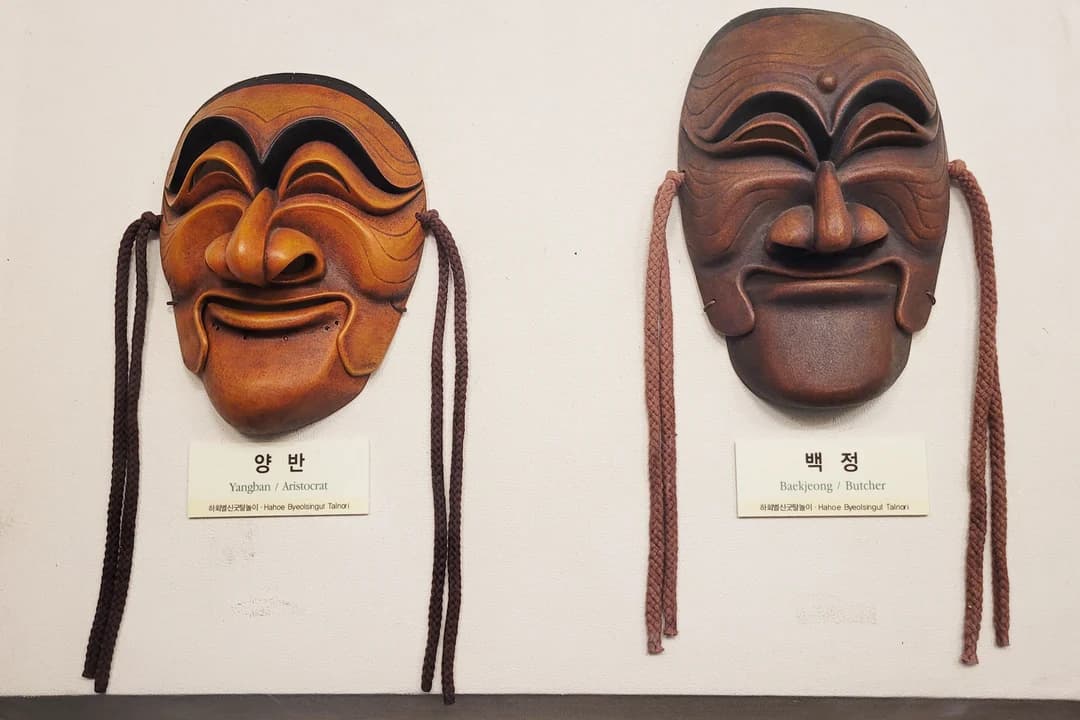
The Hahoe Byeolsin-gut mask play is a village ritual that mixes shaman rite, folk opera and pantomime, and it is a nationally designated intangible cultural property (No. 69). The Hahoe World Mask Museum (206 Jeonseo-ro, Pungcheon-myeon) opened in 1995 and holds some 200 masks in halls devoted to Korea, Asia and the world, plus special exhibitions. It is open 09:30 to 18:00 and closed on Lunar New Year and Chuseok (as of 2026-10-11), and the hands-on programs cost extra.
The Andong International Mask Dance Festival is held every year from late September into the first Sunday of October; in 2026 it ran from 24 September to 4 October at the Andong Station area (Central Line 1942 Andong Station), downtown, and Talchum (mask dance) Park, with masks and mask dances from around the world. The 2026 edition has finished. Dates for next year's festival are announced each year and this guide is updated when they are confirmed.
Dosan Seowon, Byeongsan Seowon and Bongjeongsa
Dosan Seowon (154 Dosanseowon-gil, Dosan-myeon) was founded in 1574 by the disciples of the scholar Yi Hwang (Toegye), who had retired to the site in 1549, and it is a World Heritage property in the 2019 listing of nine academies; it appeared on the reverse of the 1,000-won note from 1975 to 2007. Admission is ₩2,000 for adults, ₩1,000 for teenagers and children, with the Okjingak hall included, and the opening hours are 09:00 to 18:00 in the warm months and 09:00 to 17:00 in winter (as of 2026-10-11). Nearby are the Toegye head house, his birthplace and the free Confucian Culture Museum.
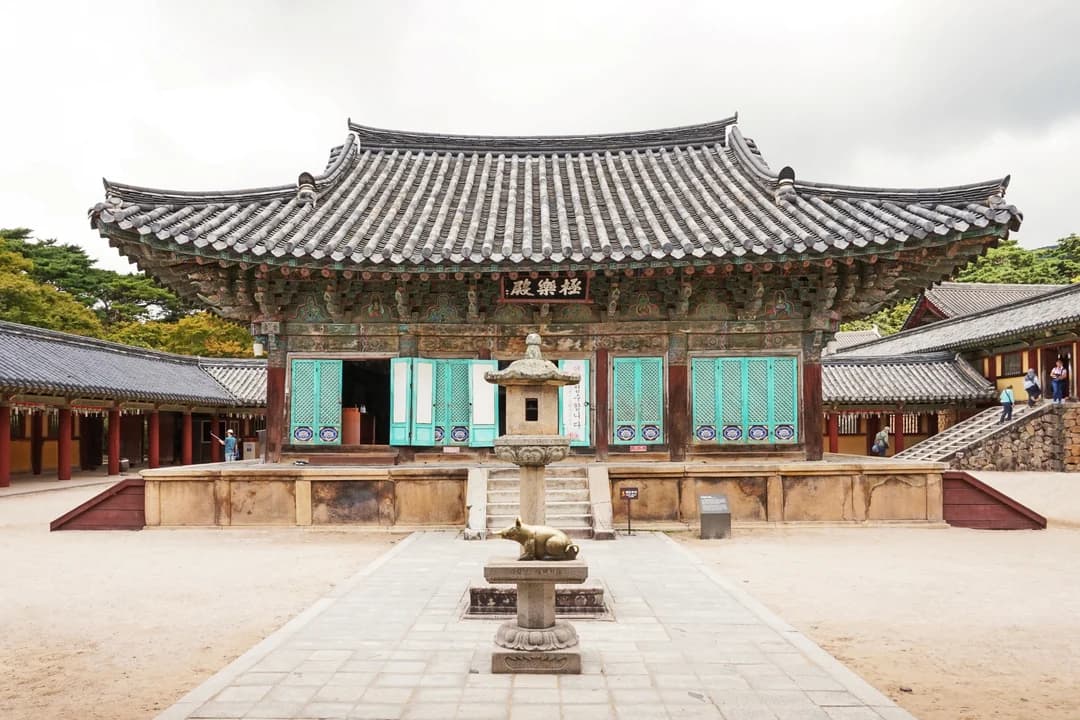
Byeongsan Seowon (386 Byeongsan-gil, Pungcheon-myeon) honors the statesman Yu Seong-ryong and was named in 1614, after a school he moved to this riverside site in 1572; it keeps the same hours of 09:00 to 18:00 and 09:00 to 17:00 and has the long Mandaeru pavilion facing the river. It lies in the Hahoe area and makes a natural second stop. Bongjeongsa (222 Bongjeongsa-gil, Seohu-myeon), on Mount Cheondeung, is traditionally said to have been founded in 672; its Geungnakjeon hall, from the early 1200s, is National Treasure No. 15 and thought to be Korea's oldest surviving wooden building, and the Daeungjeon is National Treasure No. 311. The temple was listed in 2018 among seven mountain monasteries, entry is free, and it is open 07:00 to 19:00 in summer and 08:00 to 17:00 in winter.
Andong town: Wolyeonggyo, museums and Hanji
Wolyeonggyo is a wooden footbridge across the Nakdong River at Andong Dam, 387 meters long and 3.6 meters wide, opened in 2003; it is free and links Wolyeong Park with the Folk Village side (as of 2026-10-11). A lakeside path of about 2 km continues to Beopheung Bridge, and the street lamps along it are lit from sunset until midnight from March to October. Nearby are the Andong Folk Museum (09:00 to 17:30), the Imcheonggak house and the Nakdong River musical fountain.
In the center, the Traditional Culture Contents Museum (203 Seodongmun-ro) is open 09:30 to 18:00 and closed on Mondays, 1 January, Lunar New Year and Chuseok, and the Andong Soju and Traditional Food Museum (71-1 Gangnam-ro) is open 10:00 to 17:00. In Pungsan-eup the Andong Hanji exhibition hall (13 Nabau-gil) is open 09:00 to 18:00 with paid hands-on paper programs, and the Independence Movement Memorial Hall in Imha-myeon is free and closed on Mondays. Andong calls itself the capital of Korean spiritual culture, and about 153,000 people live in the city.
Andong food: jjimdak, soju and heotjesabap
Andong jjimdak is chicken braised with glass noodles and vegetables in a soy-based sauce, finished with spinach and scallions; its origin is disputed, with the most likely story being the chicken alley of the Old Market in the 1980s. Jjimdak Street inside the Old Market (58-15 Beonyeong 1-gil) has more than 30 specialist restaurants and keeps hours of 08:30 to 22:00; the tourism board lists a typical dish at about ₩32,000 (as of 2026-10-11). Hanwoo Galbi Street in front of Andong Station, open 10:00 to 22:00, has about 15 restaurants and lists marinated Korean beef ribs at about ₩25,000 for 200 g.
Andong soju is a grain spirit distilled at 45% alcohol, and a museum in town tells its story. Heotjesabap is a bibimbap made from the food prepared for ancestral rites, reflecting the Confucian custom of sharing the offerings with family and guests after the ceremony. Andong sikhye is not the sweet rice drink found elsewhere in Korea but a savory fermented dish of rice and radish with little liquid, seasoned with chili powder and ginger and eaten with a spoon.
Where to stay, families and accessibility
In Daegu, stay near Dongdaegu Station for early trains and buses, near Dongseongno and Banwoldang for restaurants and the metro, or near Suseong Lake for a calmer evening. In Andong, the area around the station and bus terminal is the practical choice, and a night in the town lets you reach Hahoe early. The Hakgasan hot spring (14 Hakgasanoncheon-gil, Seohu-myeon) charges ₩6,500 for adults and is open 06:00 to 20:00, closed on the first and third Monday of each month (as of 2026-10-11).
Access varies by site. Donghwasa, the Daegu Art Museum and Yangnyeongsi are wheelchair friendly with parking and elevators, Hahoe lends wheelchairs free of charge, but Gatbawi has no wheelchair access and the climb is steep, and the Suseong Lake has no special facilities. Children enjoy E-World, the cable cars and the mask museum; a bus day to Andong is long for very young children, so split it with an overnight stay.
Safety and etiquette
Daegu summers are among the hottest in Korea, so carry water, avoid long midday walks and use the metro and indoor stops to cool down. At seowon academies and temples, stay on the marked paths, do not touch buildings or climb on platforms, take your shoes off where asked and keep your voice low. Hahoe is a living village, so do not enter private yards or photograph into houses.
For emergencies, call 112 for the police and 119 for fire or an ambulance, and the Korea Travel Hotline 1330 answers in English. Gatbawi is crowded at the start of each month, during exam season and at New Year, so go on a weekday morning if you want space. Alcohol is for those aged 19 and over.
3-day itinerary
- Day 1, Daegu center: arrive at Dongdaegu Station (about 1 hour 40 minutes from Seoul by KTX), then Seomun Market (09:00 to 18:00), the Gyeongsang Gamyeong and old alleys, Yangnyeongsi and its Museum of Oriental Medicine (10:00 to 18:00, closed Mondays), and dinner and a stroll on Dongseongno.
- Day 2, Palgongsan and Andong: ride the Palgongsan cable car and visit Donghwasa and, if you want the climb, Gatbawi in the morning; then travel back to Dongdaegu and take a bus to Andong (about 1 hour 20 minutes), walk Wolyeonggyo at dusk, eat jjimdak in the Old Market and sleep near the station.
- Day 3, Hahoe: go early to Hahoe Folk Village (09:00 opening), see Buyongdae, the mask museum and Byeongsan Seowon, then return to Andong by local bus or taxi in the afternoon and take a bus to Daegu (about 1 hour 20 minutes) or onward to Seoul (about 3 hours).
5-day itinerary
- Day 1: arrive at Dongdaegu Station, then Seomun Market, the Gyeongsang Gamyeong and old alleys, and the Seomun or Chilseong night market in season.
- Day 2: Palgongsan by cable car, Donghwasa and Gatbawi in the morning; Yangnyeongsi and Kim Gwang-seok Street in the afternoon; Dongseongno in the evening.
- Day 3: Dodong Seowon and Suseong Lake in the morning, the Daegu Art Museum (closed Mondays) or National Museum, then E-World and 83 Tower at dusk, or the Apsan observatory for the night view.
- Day 4: take an early bus to Andong (about 1 hour 20 minutes), spend the day at Hahoe Folk Village, Buyongdae and the mask museum, and sleep in Andong.
- Day 5: Dosan Seowon in the morning, Bongjeongsa temple, then Wolyeonggyo and the Old Market for a jjimdak lunch before a bus back to Daegu (about 1 hour 20 minutes) or to Seoul (about 3 hours).
Tips
- Start Andong days early: Hahoe, Dosan Seowon and Byeongsan Seowon all open at 09:00 and shorten their hours in winter.
- Buy your bus ticket back to Daegu or Seoul as soon as you arrive in Andong, and remember that the last services run in the evening.
- Use the metro and indoor stops in July and August, and see Palgongsan, Apsan and Suseong Lake in the late afternoon.
- Bring a small amount of cash for market stalls and temples and a Tmoney card for buses, the metro and taxis.
- Check the day of the week: Yangnyeongsi's museum, the Daegu Art Museum and several Andong museums close on Mondays.
- Dress in layers for the hills and carry the Korea Travel Hotline number, 1330, for help in English.
Sources and last update
Last updated: 11 October 2026. Figures are as of the date shown.
Source: Daegu tourism · Andong City tourism · Daegu City tourism · E-World and 83 Tower · Wikipedia · Wikivoyage · Checked 11 Oct 2026
Written by HOLIDAY in its own words from official public information. This is not an official publication of the Korea Tourism Organization or any government body.
HOLIDAY refreshes this article regularly as fares, hours and event dates change.