Destination briefing
Why travelers stop here
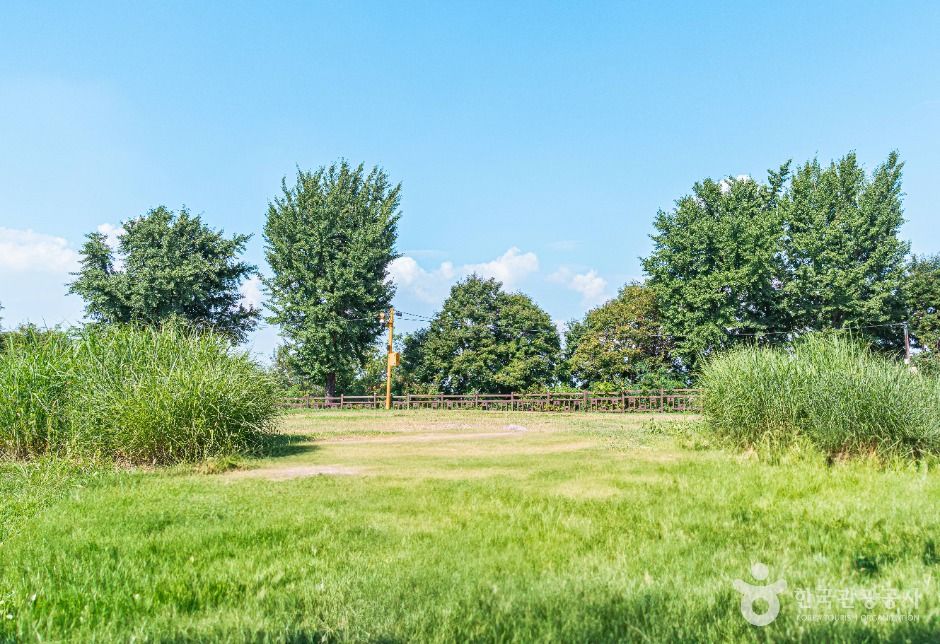
Heojun Neighborhood Park was named to honor Heo Jun (1539–1615), the author of Dongui Bogam (25 volumes, 3106 pages), who was born and died in this region (Gongam). The park was created as a neighborhood park for nearby residents during the large-scale housing development in this area by Seoul City. Before Olympic Expressway was built, this place was a beautiful riverside where river flowed down to the foot of Tapsan Cliff, and two rocks rose like pillars in the river. According to legend, these rocks were called Gwangjuam because they drifted down from Gwangju, and Gwangju County used to receive several bundles of broomcorn brooms from Yangcheon as a tribute for the rocks. However, when Yangcheon said they could take the rocks back as they were unnecessary, such practice ceased.
To preserve Gwangjuam, which was at risk of being buried due to housing development, a new revetment was built to create a lake park. Around the park, there are many legends and historical sites. On Tapsan, there were Gongam Chungtap and Soyujeong Pavilion, and the Han River viewed from here was as wide and beautiful as the sea, so many poets and writers soothed their weary minds here and made it a subject of poetry and painting. Passing through the west gate of the park, there is Gongam Ferry, where the legend of Tugeumtan (throwing gold into the river) tells that Yi Jo-nyeon and Yi Eok-nyeon, famous scholars of the late Goryeo period, threw a lump of gold they found on the road into the river to avoid harming their brotherly love. There is also Heogabawi Rock, the cave of the founder of the Yangcheon (Gongam) Heo clan. About 1 km further, there are Yangcheon Hyanggyo, the only local Confucian school remaining in Seoul, Yangcheon Ancient Fortress Site, and Soakru Pavilion Site.
OTA-ready stop
Built into inbound routes and day-tour planning.
Local context
서울특별시 강서구 허준로5길 42 (가양동)
Travel fit
Attraction · Seoul
![[서울둘레길 15코스] 노을·하늘공원코스](https://tong.visitkorea.or.kr/cms/resource/98/3526198_image2_1.jpg)

![[Early bird] Elysian Gangchon Ski & Snowboard Gugok Ice Wall Tour](/_next/image?url=https%3A%2F%2Fadmin.holidaykr.com%2Fapi%2Fadmin%2Fsystem%2Fbasic-settings%2Ffavicon%3Fpath%3D%252Fuploads%252Fproducts%252Fthumbs%252F750_1792085658746_file1.webp&w=3840&q=75)