Destination briefing
Why travelers stop here
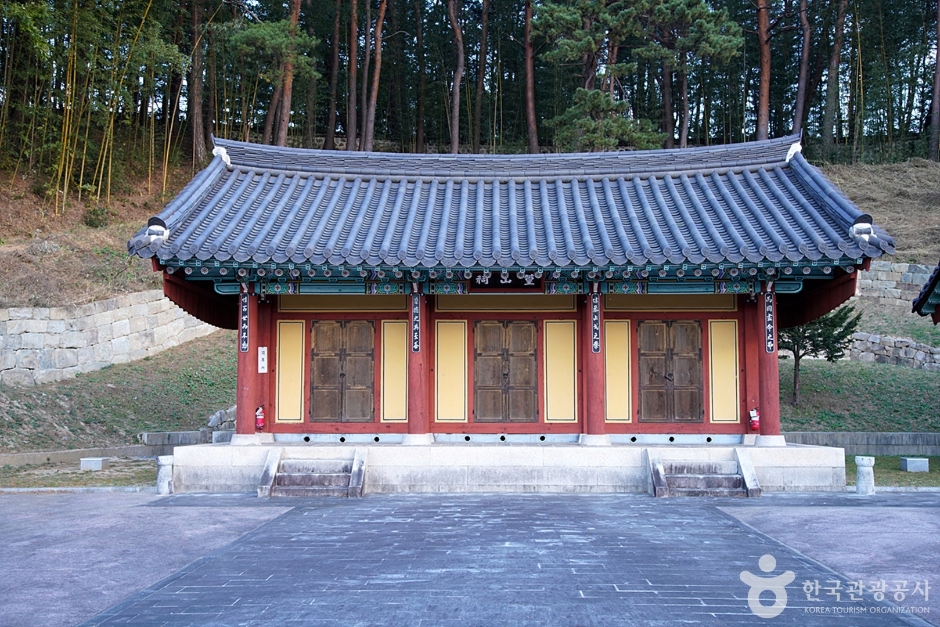
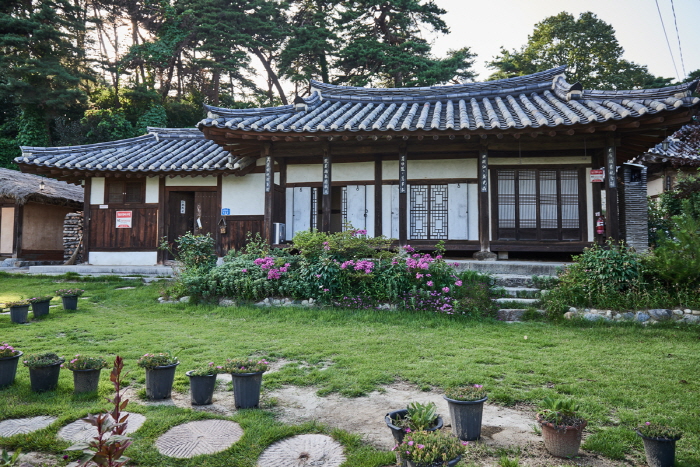
Seongyojang is the best-preserved nobleman's house in the Gangwon-do region. Located about 4km from Gangneung City toward Gyeongpo, Seongyojang represents the upper-class houses of the Joseon Dynasty and has been designated as a National Folklore Cultural Heritage. When Gyeongpo Lake was wider than it is now, the area was called Baedari Village (船橋里), meaning 'boat bridge village,' because people crossed by boat, and the name Seongyojang originates from this. Seongyojang was built in 1703 during the reign of King Yeongjo of Joseon by Yi Nae-beon, a descendant of Grand Prince Hyoryeong, who discovered a propitious site while chasing a group of weasels. His descendants still live there today. The total floor area is 1,051.24m² (318 pyeong), with the inner quarters (anchae), men's quarters (sarangchae), east detached pavilion (dongbyeoldang), and ancestral shrine (gamyo) neatly arranged within a long corridor. Outside the gate, there is a pavilion called Hwallaedeung built on a pond covering hundreds of pyeong, showing a complete structure with a garden. Seongyojang is not only valuable for its buildings but also as a crucial resource for studying residential life and household items of the late Joseon period, and its scenery harmonizing with the surrounding landscape is beautiful. The men's quarters of Seongyojang are called Yeolhwadang, which houses thousands of books, writings, and paintings, including Yongbieocheonga and Goryeosa.<br /><br />* Anchae (Inner Quarters)<br />The anchae was built before 1700 by Yi Nae-beon, the 10th-generation descendant of Grand Prince Hyoryeong, brother of King Sejong. It is the most humble building among Seongyojang's structures, with the main room (anbang) and the opposite room (geonneobang) facing each other across a wooden floor (daecheong), and the kitchen attached to the main room.<br /><br />* Yeolhwadang (悅話堂)<br />Yeolhwadang is the men's quarters exclusively for the male head of the household, built in 1815 (the 15th year of King Sunjo's reign) by the grandson of Yi Nae-beon. The name Yeolhwadang is said to be derived from Tao Yuanming's 'Returning to Live in the Countryside' (悅親戚之情話). Yeolhwadang is a pavilion-style building erected on three tiers of long stone blocks, presenting a very elegant appearance.<br /><br />* Dongbyeoldang (East Detached Pavilion)<br />This is a detached building exclusively for the owner, connected to the anchae, built in 1920 by Yi Geun-woo in an L-shape. It has two ondol rooms on the east side and one on the west, with a wide wooden veranda (toenmaru) on the front and narrow verandas on the back and east sides.<br /><br />* Hwallaedeung (活來亭)<br />Hwallaedeung is a pavilion built on an artificial pond in the garden of Seongyojang, constructed in 1816 (the 16th year of King Sunjo's reign), the year after Yeolhwadang was built. The pavilion's name is said to be taken from Zhu Xi's poem 'Gwanseoyugam' (爲有頭源活水來). This building is an L-shaped pavilion-style structure with a wooden floor extending into the pond, supported by stone pillars. All walls of Hwallaedeung are made of lattice doors (bunhapmun), and there is a tea room for guests next to the corridor connecting the room and the wooden floor.<br /><br />* Others<br />Between the anchae and Yeolhwadang, there was a west detached pavilion (seobyeoldang) used as a study and library, which was destroyed by fire but restored in 1996. In front of the building, there is a servants' quarters (haengnangchae). Additionally, on the side of the building, there is the site of Dongjin School (東進學校), originally a warehouse but later used to teach new learning during the enlightenment period.
OTA-ready stop
Built into inbound routes and day-tour planning.
Local context
강원특별자치도 강릉시 운정길 63 (운정동)
Travel fit
Attraction · Gangwon-do


![[Early bird] Elysian Gangchon Ski & Snowboard Gugok Ice Wall Tour](/_next/image?url=https%3A%2F%2Fadmin.holidaykr.com%2Fapi%2Fadmin%2Fsystem%2Fbasic-settings%2Ffavicon%3Fpath%3D%252Fuploads%252Fproducts%252Fthumbs%252F750_1792085658746_file1.webp&w=3840&q=75)